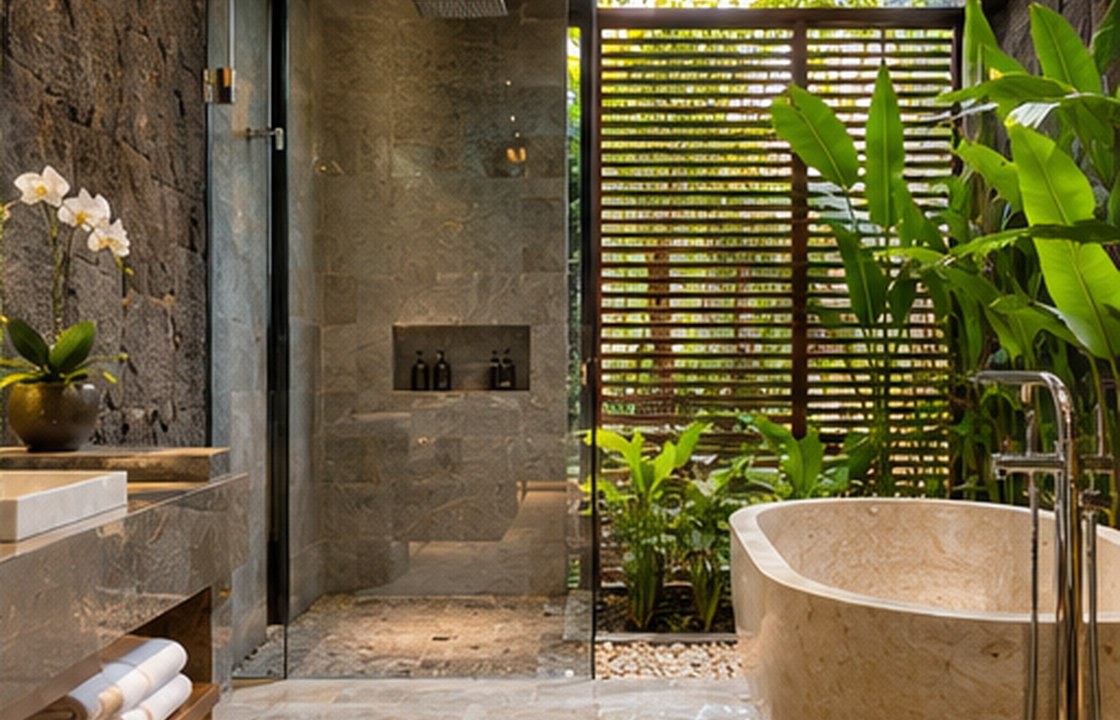
A villa bathroom can evoke a private spa without making daily cleaning and maintenance difficult. The most effective design starts with how water moves, where people stand and how concealed services will be accessed after the first year.
Combine a serene bathroom experience with waterproofing, usable storage and safe, serviceable details. The best result begins with actual family routines, a coordinated plan and decisions that can be maintained after handover.
01 — Solve water before choosing the bath
Draw the route from shower to towel, vanity and dressing area. Locate wet and dry zones, drainage falls, shower screens and door thresholds before deciding on a dramatic freestanding tub. In Abu Dhabi, well-detailed waterproofing and appropriate ventilation are essential; ask competent specialists to design and verify them for the actual construction. Avoid recessed niches or ledges that collect water without a reliable cleaning strategy.
02 — Specify materials for touch and upkeep
A honed stone may feel calm underfoot while a highly polished surface may need different slip and cleaning considerations. Check the selected material’s requirements in the exact location. Vanity cabinetry should avoid trapped moisture and allow access to shut-off valves. Choose mirrors and lighting for clear daily use rather than only decorative effect, and ensure task lighting does not create unpleasant shadows.
03 — Protect quiet comfort and access
Bathroom doors, fans and equipment can disturb bedrooms if poorly located or installed. Coordinate sound transmission, temperature and ventilation with specialist designers. Plan reachable towel storage, safe nighttime light and a clear path for housekeeping. If owners expect to age in place, examine future-access needs early; subtle preparation is easier than tearing out expensive stone after construction.
How this works in an Abu Dhabi villa
A couple chooses a sculptural bath for a master suite overlooking the garden. During review, the team discovers that a shower user must cross the room on wet stone to reach a towel. Moving the towel niche and revising the floor finish in that path may have greater daily impact than enlarging the bath. The revised concept should still feel restful, but much easier to live with.
Design decisions to review
Use a focused decision review before approving expensive finishes, joinery and technical packages. Each point should be translated into an identifiable drawing, material sample or test that the project team can explain.
| Design focus | Owner question | Evidence to request |
|---|---|---|
| Solve water before choosing the bath | Confirm wet-zone waterproofing and falls. | Draw the route from shower to towel, vanity and dressing area. |
| Specify materials for touch and upkeep | Test towel and vanity reach from fixtures. | A honed stone may feel calm underfoot while a highly polished surface may need different slip and cleaning considerations. |
| Protect quiet comfort and access | Review surface suitability and cleaning. | Bathroom doors, fans and equipment can disturb bedrooms if poorly located or installed. |
What to confirm before approval
Before approving the bathroom finish board, ask for waterproofing and drainage sections, service access locations and a plan of wet-foot movement. Test where towels, bath products and cleaning tools will be stored. When selecting stone, check product-specific care requirements and the suitability of each surface. The final handover should include maintenance information for fittings, sealants and specialist finishes. These small technical records protect the feeling of a restful room over time.
Practical checklist
Use this list during the concept and design-development review. Record who is responsible for each action and when it will be checked.
- Confirm wet-zone waterproofing and falls.
- Test towel and vanity reach from fixtures.
- Review surface suitability and cleaning.
- Keep plumbing valves serviceable.
- Check night lighting and safe movement.
- Coordinate ventilation and noise control.
Frequently asked questions
Can a walk-in shower be truly barrier-free?
It depends on the floor construction, drainage and waterproofing strategy. Confirm the detail with qualified professionals.
Is natural marble suitable for showers?
Some stones can work with correct selection and care, but product-specific maintenance and wet-zone performance must be reviewed.
What should be in the handover folder?
Waterproofing records where available, fixture manuals, finish care instructions and access locations for concealed services.
The finest spa bathroom is calm every day, not only when it has just been photographed.