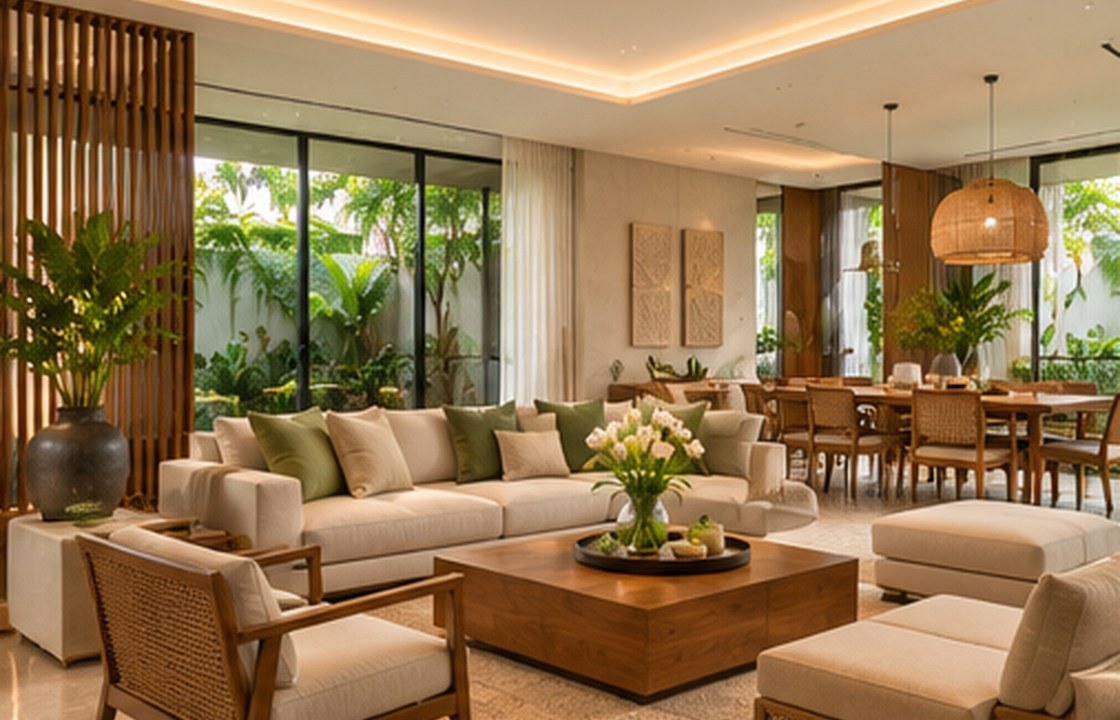
Responsible luxury is not only about buying materials labelled sustainable. It also means preserving what still works, reducing avoidable waste and choosing details that can be maintained or replaced without dismantling whole rooms.
Reduce unnecessary replacement while selecting lasting, maintainable finishes for Abu Dhabi homes. The best result begins with actual family routines, a coordinated plan and decisions that can be maintained after handover.
01 — Audit before specifying new materials
Record existing doors, cabinets, stone, furniture and lighting with their condition and potential for reuse. Some pieces may be worth refinishing or moving to another room. Others may be unsuitable because of performance, damage or changing needs. Discuss these trade-offs honestly with the owner instead of assuming a full replacement creates the best result. Preserve measurements, photographs and any material information that can support the decision.
02 — Choose a smaller, more coherent palette
A restrained set of well-detailed materials can make a villa feel more considered while simplifying future repairs. Review product information, source claims, expected lifespan and maintenance requirements. For coatings, adhesives and interior finishes, ask suppliers for relevant emission and performance documentation rather than accepting unsupported green labels. A durable finish that suits the household’s actual use can prevent repeated replacement.
03 — Design so parts can be repaired
Where feasible, use serviceable hardware, accessible lighting components and replaceable upholstery. Keep spare tiles and clear maintenance schedules for specialist materials. A modular joinery approach can make it easier to change one damaged door without dismantling a full wall. Coordinate procurement and packaging with contractors to reduce breakage and unnecessary waste, especially when bespoke items are sourced internationally.
How this works in an Abu Dhabi villa
Suppose an older villa has a well-made timber staircase but outdated wall colours and lighting. Replacing the staircase may be expensive and wasteful when careful refinishing and improved illumination can restore its presence. Compare the retained option with replacement in terms of condition, performance, cost and disruption before deciding. Responsible design values both craft and evidence.
Design decisions to review
Use a focused decision review before approving expensive finishes, joinery and technical packages. Each point should be translated into an identifiable drawing, material sample or test that the project team can explain.
| Design focus | Owner question | Evidence to request |
|---|---|---|
| Audit before specifying new materials | Audit reusable items before demolition. | Record existing doors, cabinets, stone, furniture and lighting with their condition and potential for reuse. |
| Choose a smaller, more coherent palette | Compare repair with full replacement. | A restrained set of well-detailed materials can make a villa feel more considered while simplifying future repairs. |
| Design so parts can be repaired | Ask for substantiated material documentation. | Where feasible, use serviceable hardware, accessible lighting components and replaceable upholstery. |
What to confirm before approval
Before demolition, ask for a schedule separating items that are repairable, reusable, recyclable or genuinely beyond service. Compare replacement proposals against expected performance and upkeep, and request substantiated product information for environmental claims. A simple, coordinated palette can reduce offcuts and make later repairs easier. The handover dossier should identify spare materials and cleaning methods so the chosen responsible approach continues beyond the construction period.
Practical checklist
Use this list during the concept and design-development review. Record who is responsible for each action and when it will be checked.
- Audit reusable items before demolition.
- Compare repair with full replacement.
- Ask for substantiated material documentation.
- Prefer serviceable hardware and access.
- Keep spares and care instructions.
- Plan protection, storage and waste separation.
Frequently asked questions
Is reuse always more sustainable?
Not automatically. Condition, safety, durability and replacement needs must be evaluated in context.
What should a supplier provide for an eco claim?
Request relevant product-specific certifications, test data or credible documentation rather than relying on marketing language.
Can luxury interiors use reclaimed materials?
Yes, where quality and technical suitability are verified and the design accommodates the material’s character and limitations.
The most thoughtful villa interior is one that uses resources carefully and continues to deserve them over time.
Guidance is general; confirm the rules and technical requirements for the specific property and works.